
The YouTube channel growth tips that actually move a channel aren’t a list of 15 disconnected tactics — they’re three levers: search and suggested visibility, click-through rate, and watch time. Every real growth tip is really a fix for one of those three, and knowing which lever is actually broken is worth more than any individual tip on its own. This assumes a channel already exists — if you’re starting from zero, how to start a faceless YouTube channel covers the sequence before growth tactics apply.
Quick summary:
- Growth tips only work when matched to the lever that’s actually holding a channel back — applying a CTR fix to a search problem does nothing
- Thumbnail and title work fixes click-through rate, not content quality — treat them as a separate skill
- A sustainable, realistic posting cadence outperforms an aggressive one that burns out by month two
- Most channels fail from inconsistency and unclear niche signals, not from a lack of tactics
- Data should drive decisions — checking retention and CTR after every upload catches problems before they compound
In this guide:
Why generic tips lists don’t actually grow a channel
Search for YouTube channel growth tips and most results are a numbered list — 12, 15, sometimes 20 tactics with a sentence each: post consistently, use hashtags, make good thumbnails, engage your audience. None of it is wrong, but none of it tells you which tip actually applies to your specific problem. A channel with a search-visibility problem doesn’t need a thumbnail tip, and a channel with a retention problem doesn’t need more hashtags.
The fix isn’t more tips — it’s a framework for diagnosing which lever is actually broken before applying any tactic at all.
Growth tips for search and suggested visibility
This lever determines whether YouTube’s algorithm knows who to show a video to in the first place. If a channel has healthy click-through rates but almost no views, this is usually the actual problem.
Tighten the niche signal. A channel covering five unrelated topics confuses the algorithm’s understanding of who watches it. A tight, consistent topic makes the suggested and search signal far easier to build.
Write titles and descriptions for the actual search query, not just for clicks. A title optimized purely for curiosity but with no clear topic signal can win the click and still lose the search and suggested placement that drives most long-term views.
Match content to what’s already proven to work in the niche. Reviewing which videos already perform well for a topic — yours or a comparable channel’s — reveals what the algorithm is already choosing to promote in that space.
Growth tips for click-through rate
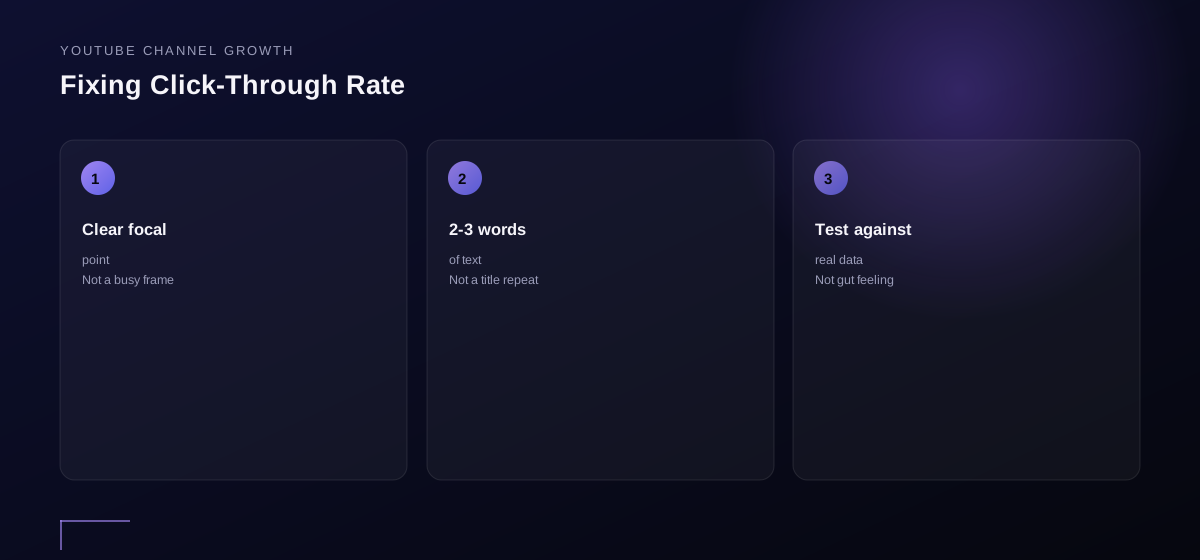
Once YouTube decides to show a video to someone, does the thumbnail and title actually earn the click? This is a completely different skill from making good content, and it’s the lever most channels underinvest in relative to how much it affects growth.
Design for a clear focal point, not a busy frame. A thumbnail with one clear subject and high contrast reads instantly, even at a small size on a phone screen — a cluttered thumbnail loses that instant readability.
Keep thumbnail text to two or three words. Text that repeats the title adds nothing; text that adds a contrasting or tension-building detail the title doesn’t already say earns its place.
Test title and thumbnail combinations against real impression data, not gut feeling. What looks appealing in isolation and what actually earns a click at scale are frequently different things.
Growth tips for watch time and retention
Did the click turn into someone actually watching? A high CTR with poor retention actively hurts a channel over time, because YouTube reads the mismatch between the thumbnail’s promise and the video’s delivery.
Front-load the hook. The first 15 seconds determine whether most viewers stay past the intro — a slow, scene-setting opening loses far more viewers than it earns in context.
Cut anything that doesn’t earn its place. Every sentence and every scene should justify its runtime. Padding a video to hit a target length costs more in retention than the extra minutes are worth.
Watch the actual retention graph, not just the average view duration. A steep early drop-off and a steady decline throughout are two different problems with two different fixes — the graph shows which one is happening.
The one real data point worth knowing
Most videos never find an audience at all — a large majority of uploads on the platform get under 1,000 views, regardless of niche. That’s not a discouraging statistic, it’s a useful one: it means the gap between a struggling channel and a growing one usually isn’t talent or luck, it’s whether the three levers above are actually being worked on deliberately, or left to chance.
A sustainable posting cadence that actually works
There’s no universal number, but YouTube’s own Creator Academy guidance is consistent with what shows up across growing channels repeatedly: predictable beats frequent. A channel publishing reliably once a week outperforms one that publishes daily for two weeks and then goes quiet, because consistency is what actually builds the trust signal the algorithm and the audience both respond to.
Pick the highest frequency a real production pipeline can sustain without cutting corners on any of the three levers — the same batching and workflow automation discipline that applies to any repeatable process — then hold that cadence for at least three months before changing it.
Common mistakes with YouTube channel growth
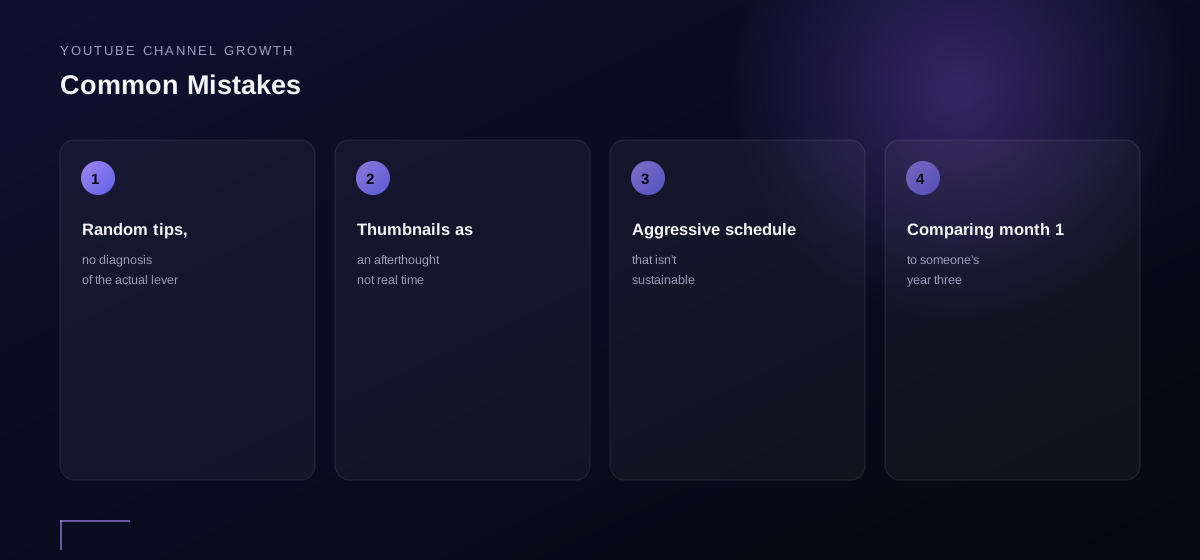
Applying a random tip without diagnosing the actual lever. Trying every tactic on a list wastes effort compared to identifying which single lever is actually holding growth back.
Treating thumbnails as a five-minute afterthought. A great video with a weak thumbnail simply doesn’t get watched — this stage deserves real time, not the last few minutes before publishing.
Chasing an aggressive schedule that isn’t sustainable. A burst of daily uploads that collapses after two weeks does more damage to the trust signal than a slower, consistent pace ever would.
Comparing month one to someone else’s year three. Growth compounds. Every channel that looks like an overnight success has months of unglamorous, inconsistent-looking data behind it.
Frequently asked questions
What are the best YouTube channel growth tips for beginners?
Start by identifying which of the three growth levers — search visibility, click-through rate, or retention — is actually the weak point, rather than applying every tip on a generic list. For a brand-new channel, search and suggested visibility usually matters most first, since there’s no data yet to diagnose CTR or retention problems.
How often should I post to grow my YouTube channel?
Pick the highest frequency your production process can sustain without cutting corners, and hold that cadence for at least three months. Predictable, sustainable posting consistently outperforms an aggressive schedule that collapses after a few weeks.
Why isn’t my YouTube channel growing even though I post consistently?
Consistency addresses one part of the search and suggested lever, but it doesn’t fix a weak thumbnail (CTR) or a slow hook (retention). A channel can post reliably and still stall if one of the other two levers is the actual bottleneck.
Summary
The best YouTube channel growth tips only work when matched to the lever they actually address — search and suggested visibility, click-through rate, or watch time and retention. Most generic advice lists skip this diagnosis step entirely. A channel that identifies its actual weak lever, fixes it deliberately, and maintains a sustainable posting cadence will consistently outgrow one following a random list of disconnected tactics.
Ready to diagnose your channel’s actual growth lever?
A free strategy call reviews your channel’s current data and identifies which of the three growth levers needs attention first. Book a Free Strategy Call →
