Starting a faceless YouTube channel is simpler than most people think — if you have a topic worth teaching and a basic understanding of how the platform rewards different video types. Most guides on how to start a faceless YouTube channel skip the foundational setup and jump straight to “record a video,” which leaves people confused about which topics actually work for faceless formats, whether they need fancy tools, or how long the whole process takes before it generates actual income.
This guide walks through how to actually start a faceless YouTube channel, from topic selection through your first 30 days, covering what most “faceless YouTube channel” guides skip: the production pipeline that makes weekly uploads sustainable, the monetization timeline you should actually expect, and the specific metrics that matter more than subscriber count in the early months.
Quick summary:
- How to start a faceless YouTube channel requires picking a topic with enough search demand to sustain uploads, not just one you personally find interesting
- The production pipeline for faceless content is different from face-on-camera content — you can batch-produce weeks of material faster than almost any other format
- Monetization takes 4–8 months minimum even on a growing channel, so plan your first 100 uploads as an investment, not an income source
- How to start a faceless YouTube channel successfully hinges on retention, not subscriber count — a 10k-subscriber channel with 40% average view duration outperforms a 100k channel with 15% retention
- Starting a faceless YouTube channel gives you time to optimize before growth kicks in, if you’re measuring the right metrics
In this guide:
Why start a faceless YouTube channel at all
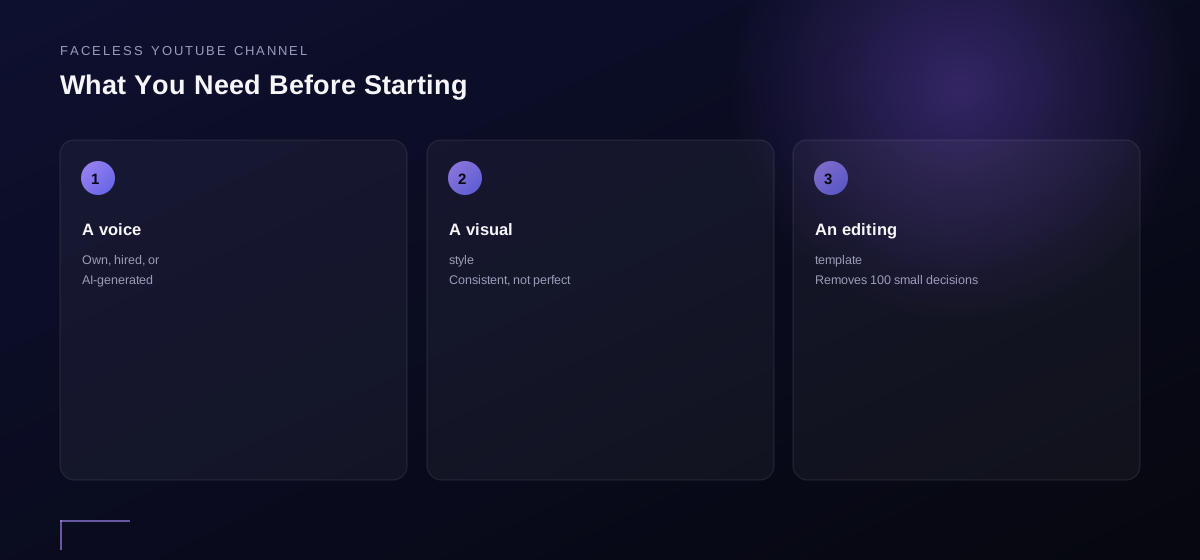
A faceless YouTube channel removes one barrier that stops most creators: you don’t need to be comfortable on camera. That’s genuinely useful, but it’s not the main reason. The real reason to start a faceless YouTube channel is that the production model scales faster than face-on-camera content, and the algorithm rewards consistency over personality in the early months.
In the first 100 videos, your subscriber count almost doesn’t matter. What matters is watch time, average view duration, and how many people click through from YouTube search into your content. All three of those metrics are easier to optimize on a faceless channel than on a face-on-camera one, specifically because you can batch-produce weeks of material in advance and iterate based on what actually works, rather than committing to a publishing style based on what felt right when you recorded it.
View count says almost nothing about what to fix. Two numbers from the first five videos, available directly in YouTube Studio’s official analytics, matter far more:
Step 1: Pick a topic before picking a tool
Every “how to start a faceless YouTube channel” guide I’ve read starts with “pick a tool” — Synthesia, Opus Clip, whatever. That’s backwards. You start by picking a topic where enough people are searching for answers that YouTube’s algorithm has material to work with. If you pick a tool first, you’ll design a process around that tool’s strengths, not your audience’s actual needs.
A good topic for a faceless YouTube channel has three qualities: real search demand (people type questions about it), a format that doesn’t require your face (tutorials, list-based content, opinion pieces all work; comedy or advice that depends on your personality doesn’t), and depth (you can make 100+ videos without running out of material).
Most creators pick topics they personally care about, which is a start. But to actually grow a faceless YouTube channel, you need a topic where other people’s search behavior matches your interest. The Venn diagram of “I want to make videos about this” and “thousands of people search for this every month” is where a sustainable channel starts.
Step 2: Validate your topic has enough search demand
Before you start building your production pipeline for a faceless YouTube channel, spend a week researching whether people actually search for your topic. YouTube’s search bar is the fastest way: type your topic, and YouTube shows you the autocomplete suggestions. If the search bar fills in 10+ related queries, your topic has search demand. If it gives you two suggestions and stops, your topic doesn’t.
Use UberSuggest or Ahrefs to check monthly search volume for the main keyword and 10–15 related ones. For a faceless YouTube channel to be sustainable, you want at least 5–10 keywords with 500+ monthly searches, so you have material that actually ranks. If your topic doesn’t have that, you can still build a channel, but growth will be slower because YouTube can’t easily categorize your content in its recommendation system.
Step 3: Build your production pipeline for weekly uploads
This is where how to start a faceless YouTube channel differs fundamentally from typical advice. Most guides tell you to “pick a tool and make a video.” But for a faceless YouTube channel to be sustainable, you need a repeatable system — a scripting template, a visual style, music you can reuse, and a production order that doesn’t require you to switch tools five times per video.
A working faceless YouTube channel production system looks roughly like this: (1) Research and outline five videos at once, based on real search terms. (2) Write scripts for all five, using a consistent template so editing is predictable. (3) Generate or source visuals in bulk — the same background music, same visual transitions, same layout for all five videos. (4) Assemble the first video completely before starting the second. (5) Publish weekly on a fixed schedule, not whenever you finish.
The reason most creators fail when starting a faceless YouTube channel isn’t lack of ideas. It’s that they rebuild their process for every video, which means every upload takes 3x longer than it should and the channel never feels cohesive to viewers.
Step 4: Produce and publish your first video
Your first faceless YouTube channel video doesn’t need to be perfect. It needs to be complete — title, description with relevant keywords, tags, and a thumbnail that matches your visual style. Most creators overthink this step. The fastest way to start a faceless YouTube channel is to publish a 5–7 minute video, with decent audio, covering a specific searchable question, and see what sticks.
When you’re starting a faceless YouTube channel for the first time, don’t obsess over whether your first video “should” be your best. Your first video is your benchmark. Video five is when you’ll actually have data on what works, and video fifteen is when you’ll start seeing consistent patterns. Focus on publishing rather than perfecting.
Step 5: Read the retention data before making video six
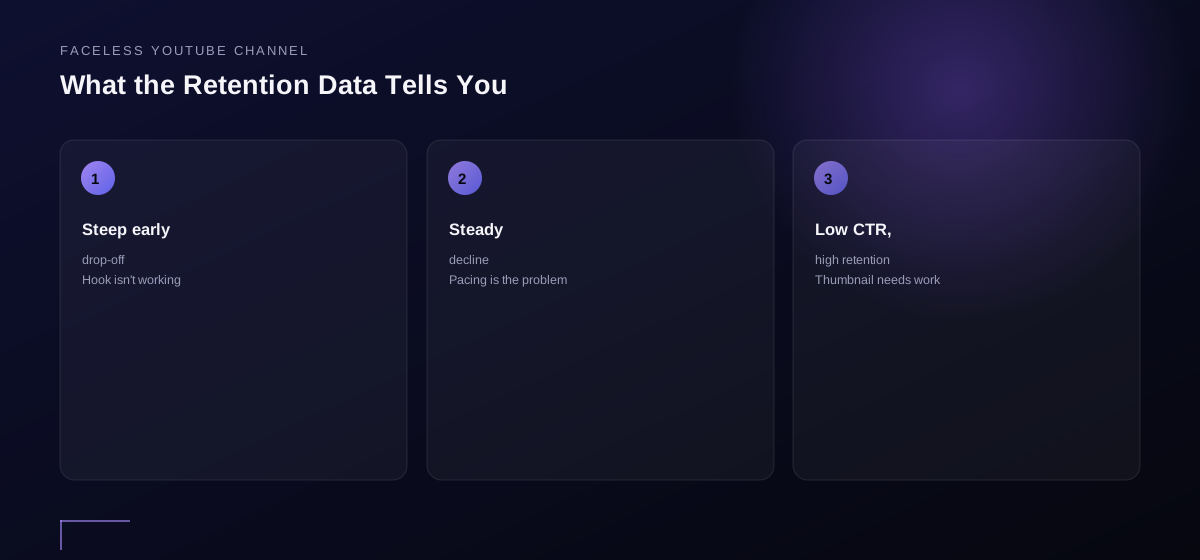
YouTube Studio’s own analytics documentation shows you average view duration for each video after about 300 views. For a faceless YouTube channel in the early stage, this number is more important than subscriber count. If your first five videos average 40% view duration, your hook is probably working and your pacing is good. If they average 20%, something in your format or script is losing people halfway through.
Many creators starting a faceless YouTube channel ignore this step and just keep uploading. That’s fine if you have time, but it’s inefficient. Spend 30 minutes reading the retention graphs, noting where people drop off, and adjusting your script template for videos six through ten. By video fifteen, those small adjustments compound into measurably better performance.
HD Media Insight: batch the writing, not every stage blind
Batching all five scripts before producing anything is the right call when starting a faceless YouTube channel — but batching every stage that way, straight through to five finished voiceovers or five sets of generated visuals before watching any of it back, carries a real risk. If video one’s pacing is off, that same pacing mistake gets baked into videos two through five before anyone catches it, because nothing gets reviewed until the whole batch is done.
A safer sequence for how to start a faceless YouTube channel: script all five, then rough out the visual plan for all five, then fully produce just the first video through a rough edit. Watch that one back specifically for pacing and hook strength before finishing the other four. It costs a little of the batching speed, but it catches a systemic mistake after one video instead of five.
Common mistakes when you start a faceless YouTube channel
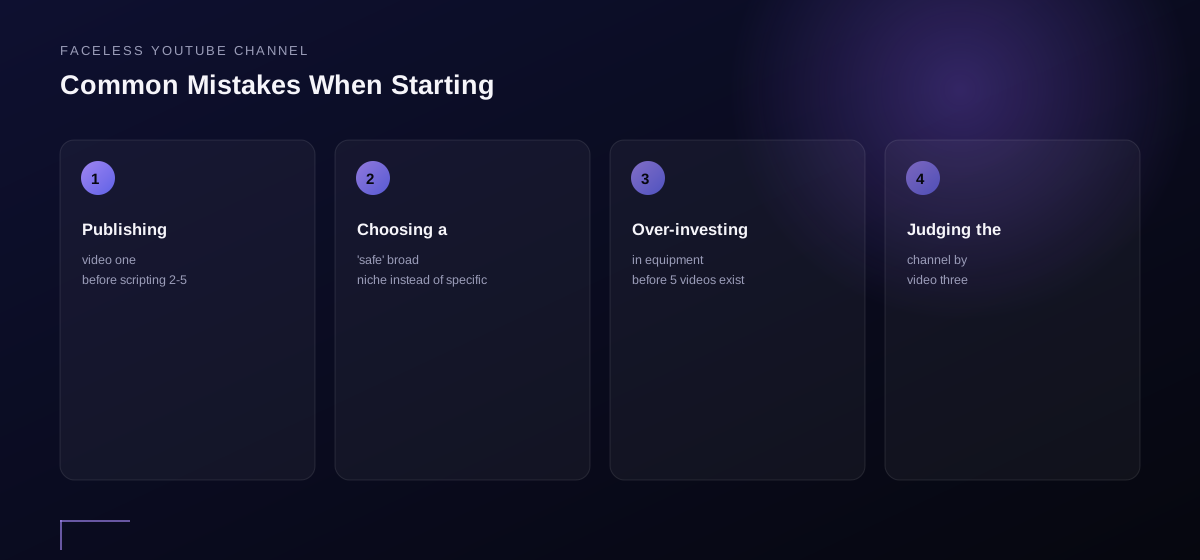
Picking a topic you enjoy instead of one people search for. How to start a faceless YouTube channel successfully is not about sharing your passions with the world — it’s about matching your production capacity to what the YouTube algorithm can actually promote. A topic with no search demand won’t grow, regardless of how much you care about it.
Switching tools or styles before video ten. Every tool teaches you something about production speed or quality. Switching tools means relearning that tool’s quirks when you already have templates. Starting a faceless YouTube channel means committing to one format, even if it feels repetitive, until you have enough data to know what to change.
Obsessing over subscriber count instead of retention. In the first hundred videos of a faceless YouTube channel, subscriber count can be nearly random. Two videos on the same topic can get dramatically different subscriber bumps based on which one YouTube’s algorithm decided to test. Watch retention instead — it tells you something real about your content.
Waiting for the “perfect” setup before publishing. Most creators starting a faceless YouTube channel never publish because they’re waiting for better tools, a better topic, or a clearer plan. Your first video teaches you more about what works than any amount of planning does. Publish something complete by week two and measure it.
Frequently asked questions
How long does it take to build a faceless YouTube channel to 10k subscribers?
For a faceless YouTube channel with good topic fit and consistent weekly uploads, 10k subscribers takes 4–12 months. The range is wide because subscriber growth depends heavily on how often YouTube’s algorithm finds you relevant to search terms. A faceless YouTube channel that ranks for high-demand keywords can grow fast; one that doesn’t can plateau for months.
Do I need expensive software to start a faceless YouTube channel?
No. Most successful faceless YouTube channel creators use free or low-cost tools: open-source editing software, free stock footage sites, and a text-to-speech tool if they’re not recording voiceovers themselves. The production quality of a faceless YouTube channel depends much more on your editing consistency than on expensive software.
Can I make money with a faceless YouTube channel?
YouTube monetization requires 1,000 subscribers and 4,000 watch hours in the last 12 months. A faceless YouTube channel can hit both those thresholds, typically within 6–10 months of consistent uploads. Income scales from there based on view count and audience location — a faceless YouTube channel with mostly US viewers will earn 2–4x more per 1,000 views than one with mostly viewers from other regions.
What’s the best topic for a faceless YouTube channel?
Topics with recurring questions — how-tos, listicles, explanations of complex processes — work better for a faceless YouTube channel than entertainment or personality-driven content. Pick a topic where the same question gets asked 100 different ways, because that’s what a sustainable faceless YouTube channel is built on.
Should I start a faceless YouTube channel if I already have an audience somewhere else?
An existing audience helps but isn’t required. A faceless YouTube channel built specifically for search ranking can outperform one that relies on an existing following, because it’s designed around what the algorithm promotes rather than what your existing audience expects. Promote between channels, but design your faceless YouTube channel for YouTube specifically.
Summary
Starting a faceless YouTube channel means picking a topic with real search demand, building a repeatable production system, and publishing weekly while measuring retention instead of subscriber count. The first hundred videos of a faceless YouTube channel are an investment in learning the platform and optimizing your format. Most creators fail when starting a faceless YouTube channel because they rebuild the process for every video or wait for perfect conditions before publishing. A faceless YouTube channel that publishes imperfect-but-complete videos on a consistent schedule outperforms one that publishes perfect videos sporadically. Pick a topic, validate the demand, build your pipeline, and launch by week two. Everything else you learn by doing.
Ready to build your production system?
The fastest path is to spend one week validating your topic, one week building your template, and week three publishing your first video. Stop planning and start publishing. A free strategy session reviews your topic against real search data and gives you a clear first-week to-do list. Book a Free Strategy Call →